
Why Your Insurer Paid Less Than the Garage Bill: Depreciation Explained
Most claim shortfalls come from depreciation written into your policy. Here are the exact rates on each part, a worked bill, and how to spot a deduction that is wrong.
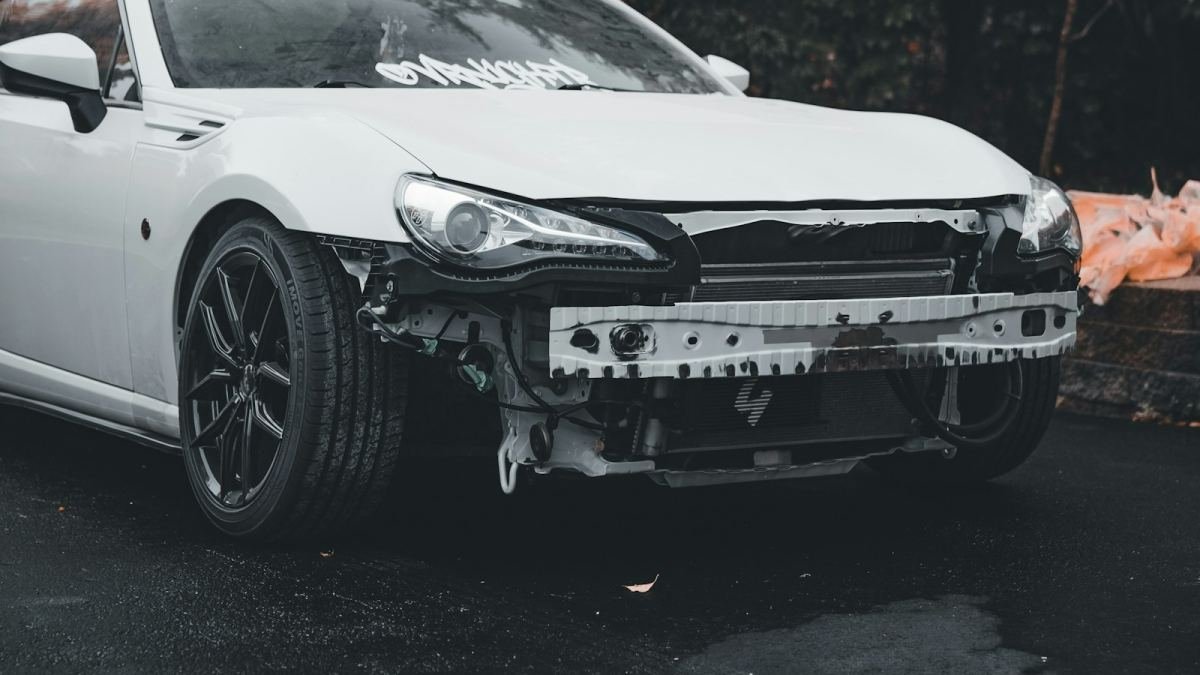
On this page
- Why did my insurer pay less than the garage bill?
- How much depreciation is deducted on each part?
- Why does even a new car get big deductions?
- How is paint depreciation worked out?
- Can you show me a real example?
- How does car age depreciation set my IDV?
- Is the insurer allowed to deduct depreciation twice?
- What does zero depreciation cover change?
- What else can reduce my claim payout?
- Is depreciation applied if a part is repaired instead of replaced?
- Is depreciation also applied to the GST on parts?
- Does depreciation apply to airbags and batteries on a new car?
- How do I check whether my settlement is correct?
The most common complaint I hear about car insurance claims goes like this: "The garage bill was ₹28,000 and the insurer paid only ₹17,000. They cheated me." Most of the time, nobody cheated anyone. The gap is depreciation, written into the policy you bought. It just wasn't explained to you when you paid the premium.
Depreciation shows up twice in car insurance, and they work differently. One reduces the value of your whole car each year, which sets your IDV. The other reduces what the insurer pays for each part replaced in a claim. Once you understand both, the numbers on your claim settlement will make sense, and you'll know when a deduction is actually wrong.
Why did my insurer pay less than the garage bill?
Almost always because of these three deductions:
- Depreciation on replaced parts. You get a new part for an old one, so the insurer deducts a percentage of the new part's price.
- Deductibles. ₹1,000 or ₹2,000 compulsory, plus any voluntary deductible you chose.
- Items not covered. Consumables like oil, coolant, nuts and bolts, unless you have a consumables add-on.
If your policy doesn't have zero depreciation cover, the first one is usually the biggest.
How much depreciation is deducted on each part?
Standard Indian car policies use these rates:
| Part | Depreciation |
|---|---|
| Rubber, nylon and plastic parts, tyres and tubes, batteries, airbags | 50% |
| Fibreglass parts | 30% |
| Glass parts | Nil |
| Paint | 50% of the material cost only |
| Labour charges | Nil |
| Metal parts | Depends on the car's age |
Metal parts follow the car's age, counted from first registration to the date of the accident:
| Car age | Metal depreciation |
|---|---|
| Up to 6 months | Nil |
| 6 months to 1 year | 5% |
| 1 to 2 years | 10% |
| 2 to 3 years | 15% |
| 3 to 4 years | 25% |
| 4 to 5 years | 35% |
| 5 to 10 years | 40% |
| Over 10 years | 50% |
Why does even a new car get big deductions?
Because so much of a modern car is plastic. Bumpers, headlamps, tail lamps, grilles, mirror housings, wheel arch liners and most of the interior are plastic, and plastic always loses 50%, whatever the car's age. A one-year-old car with a smashed bumper and headlamp can still see thousands deducted.
Metal body panels are where your car's age actually matters, and labour is always paid in full.
How is paint depreciation worked out?
Only the material part of the painting bill is depreciated, at 50%. Labour for painting is paid in full. If the garage gives one combined painting figure with no split, policy wordings treat 25% of it as material. So on a ₹4,000 combined paint bill, ₹1,000 is treated as material and ₹500 is deducted.
If your garage can split material and labour on the bill, do it. It sometimes reduces the deduction.
Can you show me a real example?
A three-year-old hatchback has a front-end hit. The garage estimate:
| Item | Bill | Depreciation | Insurer pays |
|---|---|---|---|
| Bumper (plastic) | ₹8,000 | 50% = ₹4,000 | ₹4,000 |
| Headlamp (plastic) | ₹7,000 | 50% = ₹3,500 | ₹3,500 |
| Bonnet (metal, 2 to 3 years) | ₹6,000 | 15% = ₹900 | ₹5,100 |
| Labour | ₹3,000 | Nil | ₹3,000 |
| Paint, combined bill | ₹4,000 | ₹500 | ₹3,500 |
| Compulsory deductible | −₹1,000 | ||
| Total | ₹28,000 | ₹18,100 |
The owner pays ₹9,900 of a ₹28,000 bill. Nothing here is unusual or unfair. That is just how a standard policy works. You can enter your own estimate part by part in the claim depreciation calculator.
How does car age depreciation set my IDV?
This is the other depreciation. When your policy is issued, the insurer values the car by taking a fixed percentage off the current ex-showroom price: 5% under six months, then 15%, 20%, 30%, 40% and 50% at five years. After five years the value is agreed with you. That figure is your IDV, the most you'll get if the car is stolen or written off.
It doesn't affect small claims at all. Our IDV guide covers it in detail.
Is the insurer allowed to deduct depreciation twice?
On a normal repair claim, depreciation on parts is the only depreciation applied, and it is allowed by the policy. Where people get into genuine disputes is on total loss claims. There, the payout is based on the IDV, which already reflects the car's age. Consumer commissions have ruled against insurers that tried to apply part-wise depreciation again on top of an IDV-based settlement. If that is happening to you, ask for the surveyor's assessment in writing and question it specifically.
What does zero depreciation cover change?
A zero dep add-on pays all of the part-wise depreciation for you. In the example above, the payout would rise from ₹18,100 to ₹27,000, with only the ₹1,000 deductible taken off. But:
- Most insurers allow only one or two zero-dep claims a year.
- It is usually sold only for cars up to five years old, sometimes seven.
- It does not cover consumables, unless you add that cover too.
Our zero depreciation guide helps you decide if it is worth paying for.
What else can reduce my claim payout?
- Salvage. When a part is replaced, the old one belongs to the insurer. If you keep it, its scrap value may be deducted.
- Consumables. Engine oil, coolant, brake fluid, nuts, bolts, clips and washers are not covered without the add-on.
- Wear and tear. A tyre that was already worn, or a battery that was already weak, may not be paid for in full.
- Repairs started before the survey. If you repaired the car before the surveyor saw it, the insurer can refuse part of the claim.
Is depreciation applied if a part is repaired instead of replaced?
No. Depreciation is deducted only when a damaged part is replaced with a new one. If the garage repairs a dent, straightens a panel or fixes a cracked bumper, that's labour, and labour is paid without depreciation. So for a borderline part, asking whether it can be repaired instead of replaced can reduce your share of the bill. Your surveyor decides what is repairable, but it's a fair question to ask.
Is depreciation also applied to the GST on parts?
Yes. The insurer works out its share of each part's price after depreciation, and GST on that part follows the same split. If 50% of a bumper's price is deducted, 50% of the GST on the bumper is also yours to pay. Labour and its GST are paid in full.
Does depreciation apply to airbags and batteries on a new car?
Yes, at 50%, whatever the car's age, because policy wordings group airbags and batteries with rubber, nylon and plastic parts. Airbags are expensive to replace after they deploy, often ₹20,000 to ₹60,000 including the control unit, so on a car without zero dep, an airbag deployment alone can leave you with a large bill. It's one of the strongest arguments for keeping zero dep on a new car.
How do I check whether my settlement is correct?
Ask the insurer or the garage for the surveyor's assessment sheet. It lists every part, its price, the depreciation applied and the deductibles. Then:
- Check each part's material (plastic, metal, glass) is correctly classified.
- Check the metal rate matches your car's age on the accident date.
- Check labour wasn't depreciated.
- Check paint depreciation was applied only on material.
If something is wrong, write to the insurer and point to the specific line. Specific objections get corrected far more often than general complaints that the payout was too low.

I'm Yash Gupta, born in 2008, and I started FinanceBudget in December 2025. I write every guide on this site and maintain the rates behind the calculators. I built it because car insurance renewal notices and claim settlements are full of numbers that nobody…
Found a mistake? Tell us through the contact page. Our corrections policy explains how we fix errors. This guide is general information, not advice for your specific policy. See the disclaimer.
Related guides
How to Claim Car Insurance in India Without Getting It Cut or Rejected
Claims punish you for doing things in the wrong order. Here is the right order, from the accident to the payout, and what to do if the insurer pays too little.
Car Insurance Renewal: What to Check Before You Press Pay
Wrong NCB, a quietly cut IDV, add-ons you never asked for. Fifteen minutes with this checklist once a year catches all of them.
Car Insurance Add-ons: Which Ones Are Worth Paying For?
Some add-ons save you lakhs, some duplicate cover you already have. Here is who actually needs each one, and a sensible pack for new and older cars.